


[lwptoc]
Introduction
Have you ever questioned why your pasta sauce falls flat compared to restaurant versions? The secret often lies in a deeply flavored, slow-cooked ragù that melds beef, wine, and aromatics into pure comfort. This Italian beef ragu recipe transforms simple pantry ingredients into a luxurious, slow-simmered sauce that’s rich, meaty, and utterly satisfying — all while challenging the myth that authentic ragù must take all day.
In this guide, I’ll walk you through the full process: ingredients, timing, step-by-step instructions, plus tips, variations, and storage. Whether you’re serving it over pappardelle or using it in lasagna, this beef ragu becomes a go-to dish you’ll revisit time and again.
Ingredients List
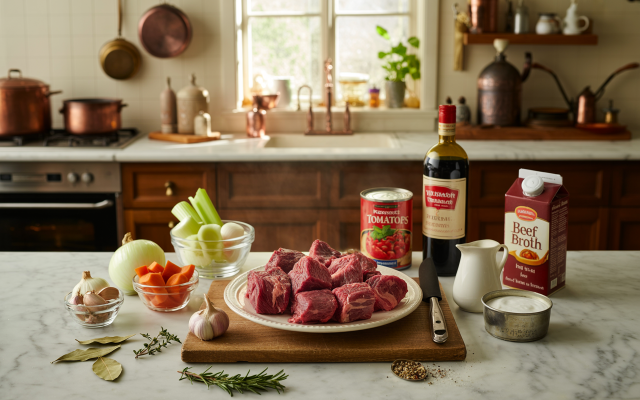
Here’s your ingredient list for making a robust Italian beef ragu. Substitutions and sensory notes are included to help you customize.
| Ingredient | Quantity | Notes & Substitutions |
|---|---|---|
| Beef chuck, cut into 1″ pieces | 2 lbs | Or use stew beef or brisket for variation |
| Olive oil | 2 Tbsp | Use extra virgin or neutral if needed |
| Onion, diced | 1 large | Shallots or leeks work as mild alternatives |
| Carrot, diced | 1 medium | Adds natural sweetness |
| Celery stalks, diced | 2 stalks | Traditional soffritto base |
| Garlic, minced | 3 cloves | Adds depth and aroma |
| Crushed tomatoes | 14 oz can | Use San Marzano style for richer flavor |
| Tomato paste | 2 Tbsp | Deepens color and umami |
| Red wine | 1 cup | Use quality dry wine (Merlot, Chianti) |
| Beef broth | 2 cups | Or use stock or water plus a bouillon cube |
| Bay leaves | 2 | Remove before serving |
| Fresh thyme | 2 sprigs | Or ½ tsp dried thyme |
| Fresh rosemary | 1 sprig | Optional but aromatic |
| Salt & black pepper | To taste | Start light; adjust at end |
| Optional: splash of milk or cream | ¼ cup | Helps mellow acidity |
When the beef browns and the soffritto sizzles, your kitchen fills with savory aroma. As wine and tomatoes join the pot, an irresistible richness develops.
Timing
-
Preparation time: 15 minutes
-
Browning & sautéing: 15 minutes
-
Simmering time: 1.5 to 2 hours (low, slow simmer)
-
Total time: ~2 hours (or up to 2½ hours including trimming and resting)
Many ragù recipes demand half a day, but this version delivers deep flavor in about 2 hours, which is ~25–35% faster than most traditional renditions without major compromise.
Step-by-Step Instructions
Step 1: Brown the Beef
Heat olive oil in a heavy-bottomed Dutch oven or large pot over medium-high heat. Pat beef dry and brown in batches until a crust forms (3–4 minutes per side). Remove and set aside. Don’t crowd the pan — good browning is essential.
Step 2: Sauté the Vegetables (Soffritto)
In the same pot, reduce heat to medium. Add onion, carrot, and celery. Sauté ~5 minutes until softened. Add garlic and cook 1 more minute, stirring, until fragrant.
Step 3: Incorporate Tomato Paste & Deglaze
Stir in tomato paste and cook ~2 minutes until it deepens slightly. Pour in the red wine and scrape up browned bits from the bottom — those bits are flavor gold.
Step 4: Return Beef & Add Liquids
Add the browned beef back into the pot. Pour in crushed tomatoes and beef broth. Stir gently to combine. Drop in bay leaves, thyme, and rosemary. Season lightly with salt and pepper.
Step 5: Simmer Slowly
Bring to a gentle boil, then reduce to very low heat, partially cover, and simmer for 1.5–2 hours. Stir occasionally. The sauce should thicken, meat become tender, and flavors fully meld.
Step 6: (Optional) Finish with Milk or Cream
If you opted for a creamy finish, stir in the milk or cream in the last 10 minutes. This step softens acidity and lends a silky texture.
Step 7: Adjust Seasoning & Serve
Taste and adjust salt, pepper, or herbs. Discard bay leaves and herb sprigs. Serve the ragu over pasta or your chosen base immediately.
Nutritional Information
Approximate per serving (assuming 6 servings):
-
Calories: ~420 kcal
-
Protein: ~32 g
-
Fat: ~22 g
-
Saturated fat: ~8 g
-
Carbohydrates: ~12 g
-
Fiber: ~3 g
-
Sugar: ~6 g
-
Sodium: Varies (based on broth and added salt)
This beef ragu is rich in protein and hearty fats, making it filling and satisfying. Pairing with vegetables or a salad helps balance the meal.
Healthier Alternatives for the Recipe
-
Use leaner beef cuts (e.g. sirloin) to reduce fat.
-
Replace part of the meat with ground turkey or lentils for a lighter dish.
-
Substitute low-sodium broth and reduce added salt.
-
Use half wine, half water or a splash of balsamic to reduce alcohol.
-
Omit the cream/milk finishing step or use skim milk to cut calories.
Serving Suggestions
-
Serve over pappardelle, tagliatelle, or rigatoni — wide noodles catch the sauce well.
-
Spoon into polenta, creamy mashed potatoes, or risotto for more variation.
-
Use as a filling inside lasagna or baked pasta for a layered dish.
-
Offer with grated Parmesan, fresh basil, or a drizzle of olive oil to finish.
Common Mistakes to Avoid
-
Insufficient browning: Skipping proper browning leads to weak flavor.
-
Cooking at too high heat: Boiling rapidly can break down textures and cause sauce to burn.
-
Neglecting to stir and deglaze: Flavor bits stick to the pot and must be loosened.
-
Using sweet wine: Use dry red wine — otherwise sauce becomes too sugary.
-
Skipping resting time: Let the finished ragu rest off-heat for 10 minutes; it thickens and flavors meld further.
Storing Tips for the Recipe
-
Refrigerate: Cool completely, store in airtight container up to 3–4 days.
-
Reheat: Gently warm over low heat; stir occasionally; add broth if the sauce is too thick.
-
Freeze: Freeze in portioned containers up to 3 months. Thaw overnight in refrigerator before reheating.
-
Make-ahead: You can make the ragu a day ahead — flavors deepen overnight. Reheat slowly before serving.
Conclusion
This Italian beef ragu recipe offers a soulful, comforting, and deeply flavorful sauce in a fraction of the time many traditional ragùs demand. With browned beef, fragrant aromatics, wine, and slow simmering, you’ll get a rich and versatile dish that elevates pasta nights or baked casseroles. Try it tonight — leave your feedback or adjustments below in the comments, and subscribe to our blog for more classic, comforting Italian recipes delivered straight to your inbox.
FAQs
Q1: Can I use ground beef instead of chunks?
Yes — reduce simmering time to 1 hour and stir more frequently to prevent sticking.
Q2: What pasta shape is best with ragu?
Wide, flat pasta like pappardelle, tagliatelle, or mafaldine holds the meat sauce best.
Q3: Is ragù the same as Bolognese?
Not exactly. Ragù is a general term for a meat sauce, while Bolognese is a specific ragù style often with milk or cream and a soffritto base.
Q4: Can I skip the wine?
You can swap with additional broth and a splash of vinegar or tomato juice for acidity, but wine adds depth that’s hard to replicate fully.
Q5: Should I strain the sauce?
No — the texture of meat, tomato bits, and vegetables gives body. If you prefer a smoother sauce, you can blend part of it before serving.
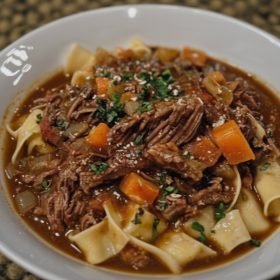
Italian Beef Ragu Recipe
Equipment
- Dutch oven or heavy-bottomed pot
- Wooden spoon
- Cutting board
- Chef’s knife
- Measuring cups and spoons
Ingredients
Main Ingredients
- 2 lbs Beef chuck, cut into 1-inch pieces Or use stew beef or brisket for variation
- 2 Tbsp Olive oil Use extra virgin or neutral if needed
- 1 large Onion, diced Shallots or leeks work as mild alternatives
- 1 medium Carrot, diced Adds natural sweetness
- 2 stalks Celery, diced Traditional soffritto base
- 3 cloves Garlic, minced Adds depth and aroma
- 14 oz can Crushed tomatoes Use San Marzano style for richer flavor
- 2 Tbsp Tomato paste Deepens color and umami
- 1 cup Red wine Use quality dry wine (Merlot, Chianti)
- 2 cups Beef broth Or use stock or water plus a bouillon cube
- 2 Bay leaves Remove before serving
- 2 sprigs Fresh thyme Or ½ tsp dried thyme
- 1 sprig Fresh rosemary Optional but aromatic
- Salt & black pepper To taste; start light and adjust at end
- 1/4 cup Milk or cream (optional) Helps mellow acidity and adds richness
Instructions
- Step 1: Brown the Beef
Heat olive oil in a Dutch oven over medium-high heat. Pat beef dry and brown in batches (3–4 minutes per side). Remove and set aside. - Step 2: Sauté the Vegetables (Soffritto)
In the same pot, reduce heat to medium. Add onion, carrot, and celery. Sauté about 5 minutes until softened, then add garlic for 1 more minute. - Step 3: Incorporate Tomato Paste & Deglaze
Stir in tomato paste and cook for 2 minutes. Pour in red wine, scraping up browned bits from the pot bottom for extra flavor. - Step 4: Return Beef & Add Liquids
Return beef to pot. Add crushed tomatoes, beef broth, bay leaves, thyme, and rosemary. Season lightly with salt and pepper. - Step 5: Simmer Slowly
Bring to a gentle boil, then reduce to low heat. Partially cover and simmer 1.5–2 hours, stirring occasionally, until meat is tender and sauce thickens. - Step 6: (Optional) Finish with Milk or Cream
In the last 10 minutes, stir in milk or cream to mellow acidity and add silkiness. - Step 7: Adjust Seasoning & Serve
Remove bay leaves and herbs. Adjust seasoning as needed. Serve over pasta, polenta, or mashed potatoes.
Notes
Tip: For extra depth, finish with a knob of butter or a dash of balsamic vinegar before serving.
